
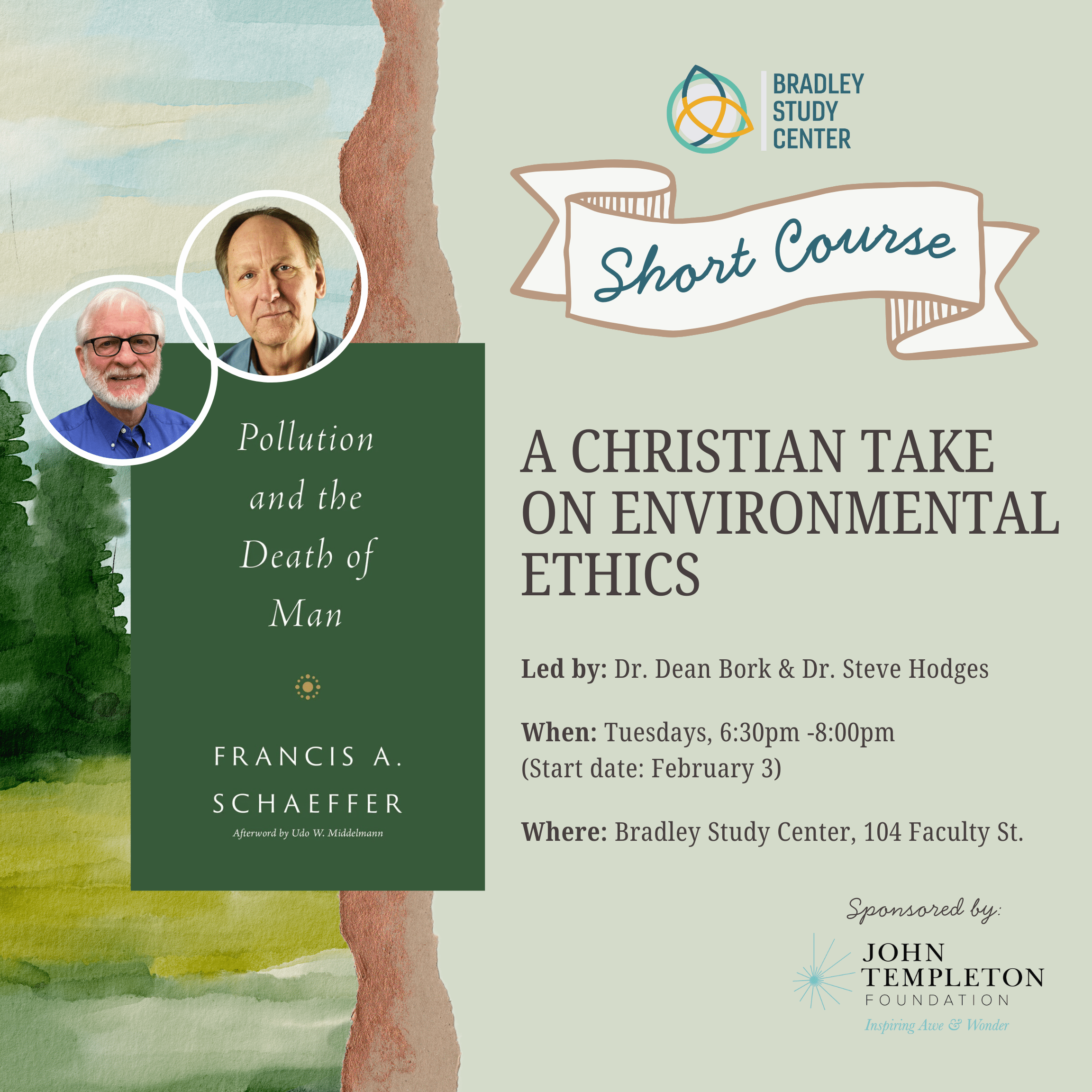
A Christian Take on Environmental Ethics Short Course: Session 2
Everyone has their idea about what constitutes environmentally responsible practices. Some of us even live by those ideas much of the time. As long as we agree with our neighbors that a particular action is “for the common good,” we are free to work side by side in cooperation with them regardless of their underlying ideas about environmental ethics. However, public policy decisions (and even our personal actions) frequently involve a choice between good things. For example, more affordable energy supplies for developing countries versus lower emissions by curtailing combustion of fossil fuels. When we engage in public discourse on such issues our objective should be persuasion. And speaking persuasively should begin with understanding the foundations of one’s own arguments. As a Christian this means having a well-formed understanding of biblical principles that are applicable to the domain of environmental ethics.
This short course will consist of five, weekly seminar sessions and will be co-led by VT Retired Professors, Dr. Dean Bork and Dr. Steve Hodges. Course readings include Pollution and the Death of Man by Francis Schaeffer (provided free to attendees) and Creation Care: A Biblical Theology of the Natural World by Douglas Moo & Jonathan Moo.
The group is currently open to new participants. If you are interested in joining, Register Here!
More about our Course Facilitators:
Dean Bork was a member of the Virginia Tech Landscape Architecture faculty from 1980 to 2020. His area of special expertise is integration of site planning and design with watershed protection and stormwater management practices. He was a leader of Christian Faculty Fellowship at Virginia Tech for over 30 years and is one of the seven co-founders of the Bradley Study Center.
Steven Hodges studied Forestry and Wildlife Ecology, and Soil Genesis at University of Florida, before earning his PH.D in Soil Chemistry and Mineralogy at Virginia Tech. His interests led him first to Clemson University, where he conducted research on acid rain and aluminum chemistry and began writing software for computer applications in agriculture. He then moved to the University of Georgia, where he served as state-wide Extension Soils Specialist, with a focus on soil fertility and management, and developing expert systems. At NC State, he served in similar roles in addition to conducting statewide educational programs in waste management and water quality, and assuming administrative duties. In 2002, he returned to Virginia Tech as Department Head in Crop and Soil Environmental Sciences (now the School of Plant and Environmental Sciences). After returning to the full-time faculty in 2008, he participated in diverse projects related to International agriculture, Conservation Agriculture, Community Food Systems, and Modeling dynamics of biofuel and agroforestry systems. He developed and taught new courses in Managed Ecosystems, Modeling Dynamic Systems (in Stella), Ecological Agriculture, and Soil Fertility before retiring in 2021. He now lives with his wife Judy in Craig County on a plot of mountain land supporting several unique Appalachian habitats where he enjoys gardening, observing birds and wildlife, caring for the land, and watching the grass grow.
This project was made possible through the support of an award from the Stephen & Laurel Brown Foundation, through the support of a grant from the John Templeton Foundation. The opinions expressed in this publication are those of the author(s) and do not necessarily reflect the views of either the Stephen & Laurel Brown Foundation or the John Templeton Foundation.